
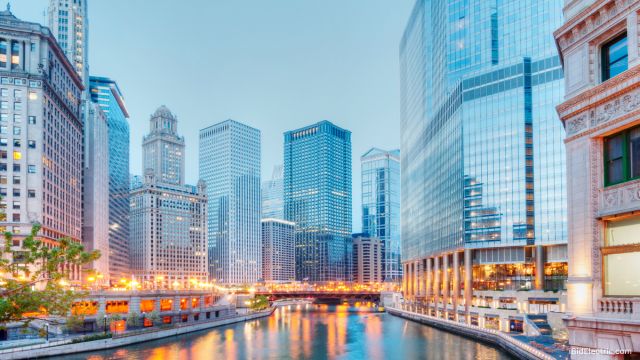
As the third-largest city in the United States, Chicago continues to be a focal point for significant construction activity. The construction outlook for Chicago in 2024 is robust, driven by a strong economy, strategic investments in infrastructure, and a diverse industry base. From residential and commercial developments to expansive infrastructure projects, Chicago is poised for substantial growth, although it faces challenges such as rising costs and labor shortages.
Industrial and Manufacturing Boom
Chicago’s strategic location as a transportation hub makes it an ideal site for logistics and distribution centers. The city is experiencing a surge in industrial and manufacturing construction, driven by the reshoring of operations and federal incentives. Significant projects include the expansion of the CenterPoint Intermodal Center, one of the largest inland ports in North America, and the development of new warehousing facilities in areas like Joliet and Elwood (Deloitte United States) (PCL Construction).
The manufacturing sector is also seeing substantial investments, particularly in advanced manufacturing and tech-driven industries. The implementation of the CHIPS Act has spurred the construction of semiconductor manufacturing plants, contributing to Chicago’s growing industrial landscape. These developments are expected to create numerous job opportunities and bolster the city’s economic growth (AGC).
Residential Development
The residential construction sector in Chicago is vibrant, with a strong demand for both single-family homes and multifamily units. The city’s efforts to increase affordable housing through initiatives like the Affordable Requirements Ordinance are crucial in addressing housing shortages. This ordinance mandates that a percentage of new residential units be set aside as affordable housing, encouraging developers to create inclusive communities (Deloitte United States) (International Banker).
Mixed-income housing projects, such as the Bronzeville Lakefront development, aim to create diverse and inclusive neighborhoods. These projects combine market-rate and affordable housing with commercial and community spaces, promoting economic growth and urban revitalization. Furthermore, there is a growing trend towards sustainable and energy-efficient residential buildings, driven by the Chicago Energy Transformation Code, which mandates stricter energy efficiency standards (PCL Construction) (AGC).
Commercial Real Estate
Commercial construction in Chicago is adapting to post-pandemic trends, with a focus on flexible office spaces and mixed-use developments. The demand for traditional office space has shifted, with more companies adopting hybrid work models. This has led to the repurposing of existing office buildings into residential or mixed-use properties, reflecting the changing needs of businesses and workers (AGC) (PCL Construction).
Retail construction is also evolving, with developers focusing on creating experiential retail environments that attract consumers. The redevelopment of iconic locations like the Old Post Office into mixed-use spaces is a testament to this trend. These projects aim to create vibrant, community-centric spaces that attract both residents and visitors, enhancing the urban experience (PCL Construction) (AGC).
Infrastructure and Transportation
Infrastructure development remains a priority in Chicago, with significant investments in transportation and public transit projects. The ongoing modernization of O’Hare International Airport, one of the busiest airports in the world, is a critical project aimed at improving connectivity and supporting the city’s economic growth. The O’Hare 21 project, which includes terminal expansions and new runways, is expected to enhance passenger capacity and efficiency (Deloitte United States) (International Banker).
Additionally, the expansion of the Chicago Transit Authority’s (CTA) Red Line is set to improve public transit options for residents. This project, which includes extending the Red Line south to 130th Street, aims to provide better access to public transportation for underserved communities and reduce traffic congestion (PCL Construction).
Environmental and Sustainability Initiatives
Chicago is committed to sustainable construction practices, with a strong emphasis on green building standards and renewable energy projects. The city is investing in solar and wind energy projects, supported by state and federal incentives. The Chicago Climate Action Plan outlines the city’s goals for reducing greenhouse gas emissions and increasing the use of renewable energy sources (International Banker).
The construction of green infrastructure, such as parks and open spaces, is also a priority. These projects are designed to enhance urban resilience, improve air quality, and provide recreational opportunities for residents. Notable projects include the continued development of the 606 Trail and the expansion of the Chicago Riverwalk, both of which contribute to the city’s green infrastructure network (PCL Construction) (AGC).
Challenges and Opportunities
Despite the positive outlook, Chicago’s construction industry faces several challenges. Rising material costs, labor shortages, and regulatory complexities are significant concerns that could slow down project timelines and increase budgets. The city’s aging infrastructure also requires substantial investments in maintenance and upgrades to meet modern standards (Deloitte United States) (PCL Construction).
However, opportunities abound in the form of federal funding and public-private partnerships. The Infrastructure Investment and Jobs Act (IIJA) is expected to provide significant financial support for various projects, helping to bridge funding gaps and expedite developments. Advances in construction technology, such as the use of Building Information Modeling (BIM) and green building practices, are also driving efficiencies and improving sustainability outcomes (AGC) (International Banker).
In conclusion, Chicago’s construction sector is poised for significant growth in 2024, driven by robust investments across infrastructure, residential, commercial, and industrial projects. While challenges such as high costs and labor shortages persist, the city’s strategic focus on innovation, sustainability, and public-private collaboration positions it well for continued development and resilience. By leveraging these opportunities, Chicago can continue to thrive as a dynamic and resilient urban center, meeting the evolving needs of its residents and businesses.
4o
