Electrical Estimating Certification: What It Is and Why It Matters
Electrical estimating certification has become an increasingly important credential in the construction industry. As electrical systems grow more complex and project budgets become tighter, contractors are looking for ways to verify that their estimators have the training and skills needed to price work accurately. Certification offers a structured, measurable way to demonstrate competency while giving estimators a significant advantage in hiring, promotion, and long-term career growth.
For those beginning their research, our full guide to electrical estimating training explains how estimators develop the foundational and advanced skills required for certification-level competence.
What Is Electrical Estimating Certification?
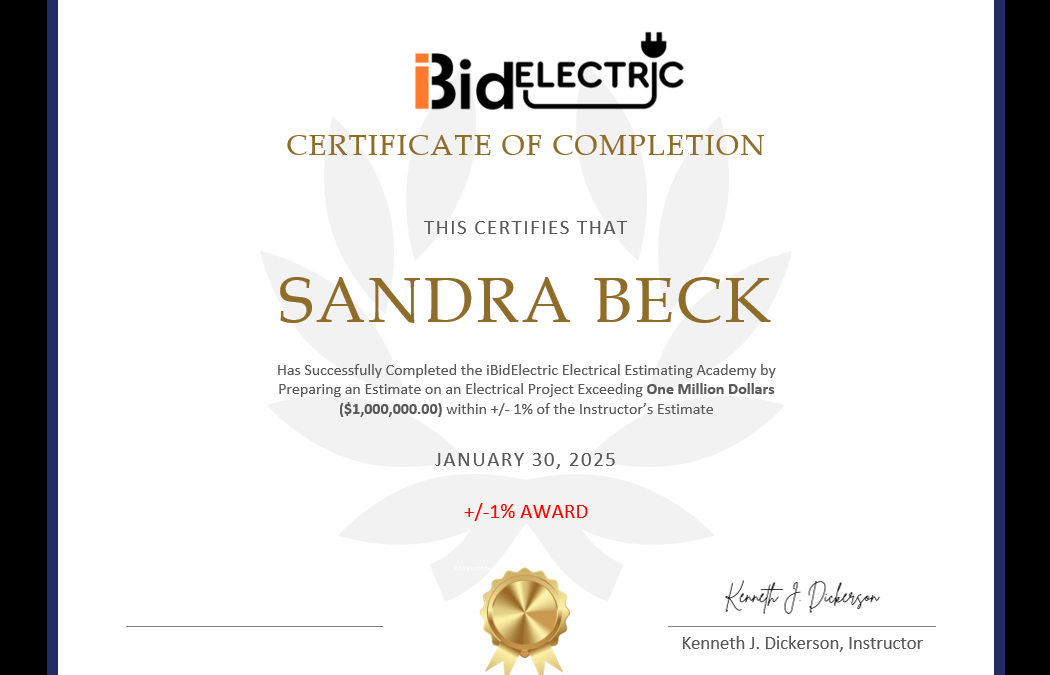
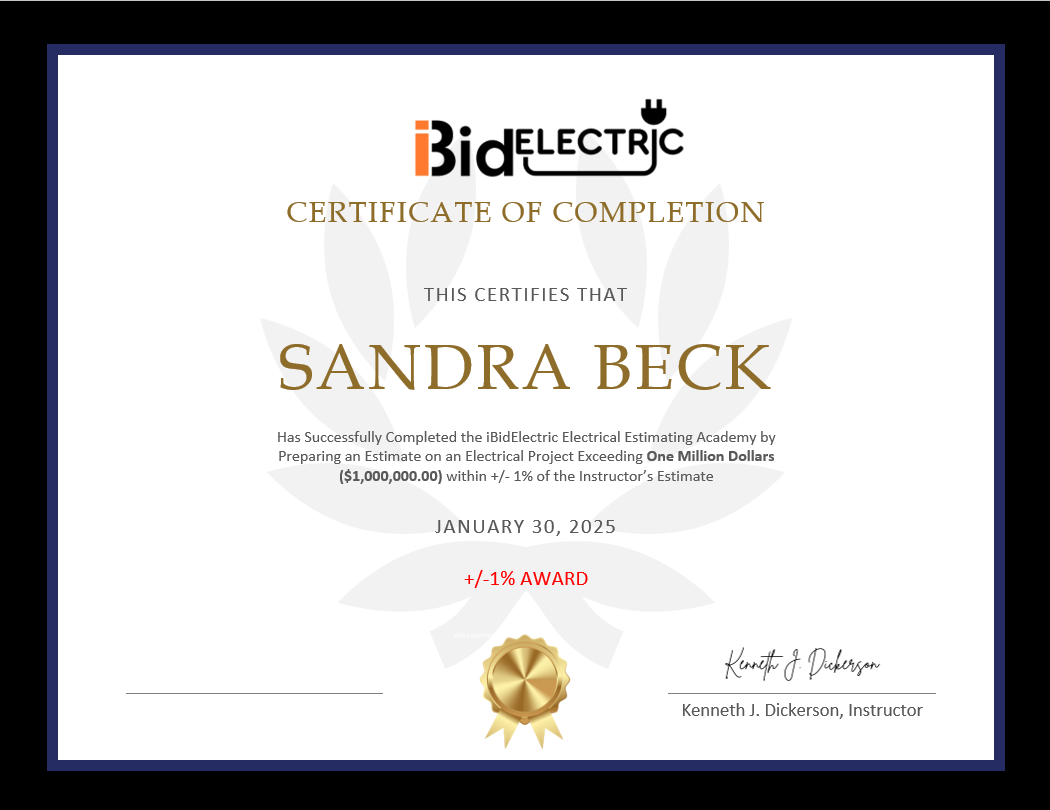
Electrical estimating certification is a formal recognition that an estimator has completed a structured program and demonstrated proficiency in key areas such as:
-
Drawing interpretation
-
Quantity takeoff
-
Material pricing
-
Labor adjustment
-
NEC application
-
Design-build estimating
-
Scope development and alternates
-
Final bid preparation
Unlike informal training, certification validates a student’s capability through testing, project work, or portfolio review.
Who Needs Electrical Estimating Certification?
Certification benefits several types of professionals:
Electricians Transitioning to Estimating
Certification helps electricians prove they have the technical and analytical skills beyond installation work.
Entry-Level Estimators
It gives new estimators a competitive edge and demonstrates commitment to the profession.
Experienced Estimators Seeking Advancement
Certification strengthens a résumé when pursuing senior roles such as lead estimator, project manager, or preconstruction manager.
Contracting Companies
Some companies require certification to standardize training and reduce estimating errors.
What Skills Should a Certification Program Cover?
A meaningful electrical estimating certification program should include both foundational and advanced competencies, such as:
1. Reading and Interpreting Drawings
Understanding systems, scales, one-lines, schedules, and plan relationships.
2. Performing Accurate Takeoff
Devices, circuits, feeders, panels, equipment, lighting, and special systems.
3. Applying Labor Units and Factors
Adjusting for difficulty, height, site conditions, and installation methods.
4. Working with Specifications
Understanding material requirements, wiring methods, and NEC-driven constraints.
5. Developing Alternates and Clarifying Scope
Identifying incomplete drawings, allowable substitutions, and value-engineering options.
6. Preparing Final Estimates
Pricing, summarizing labor and material, preparing proposals, and reviewing risks.
Certification should measure these skills—not just exposure to them.
Online vs. In-Person Certification: What’s Better?
Many professionals prefer online certification because it offers:
-
Flexible scheduling
-
Self-paced learning
-
Lower cost
-
Ability to review lessons multiple times
-
Immediate access to updated material
In-person certification may offer live interaction, but online programs often provide far more convenience and depth.
Why Certification Improves Career Opportunities
Certified estimators typically advance faster because they:
-
Demonstrate verified capability
-
Reduce employer risk
-
Produce more accurate estimates
-
Communicate better with project teams
-
Handle complex projects with greater confidence
Certification sends a clear message: this estimator knows how to price work correctly.
Does Electrical Estimating Certification Replace Real Experience?
No—certification enhances experience, but it doesn’t replace it. Estimators still need time working with drawings, pricing projects, and collaborating with project managers. However, certification dramatically shortens the learning curve and helps beginners avoid common mistakes.
How to Get Started With Certification
A strong first step is to complete comprehensive training that builds foundational and advanced estimating skills. You can review a full curriculum overview in our guide to electrical estimating training.
From there, students are typically ready to pursue certification exams or advanced-level courses.
Final Thoughts on Electrical Estimating Certification
Certification is more than a credential—it’s a proven pathway to career advancement, increased confidence, and greater accuracy in pricing electrical projects. As demand for skilled estimators rises, certification provides a powerful advantage for both individuals and the companies that employ them.
If you’re exploring certification options or training for your team, take a deeper look at our full guide to electrical estimating training, where you’ll find everything needed to begin the journey.
How Online Electrical Estimating Training Can Fast-Track Your Career
Electrical Estimator Job Outlook
Electrical Estimator Salary Expectations
Electrical Estimating Certification
Best Electrical Estimating Training Programs
How to Choose the Right Electrical Estimating Training Program
Benefits of electrical estimating training
The Electrical Estimator Career Path