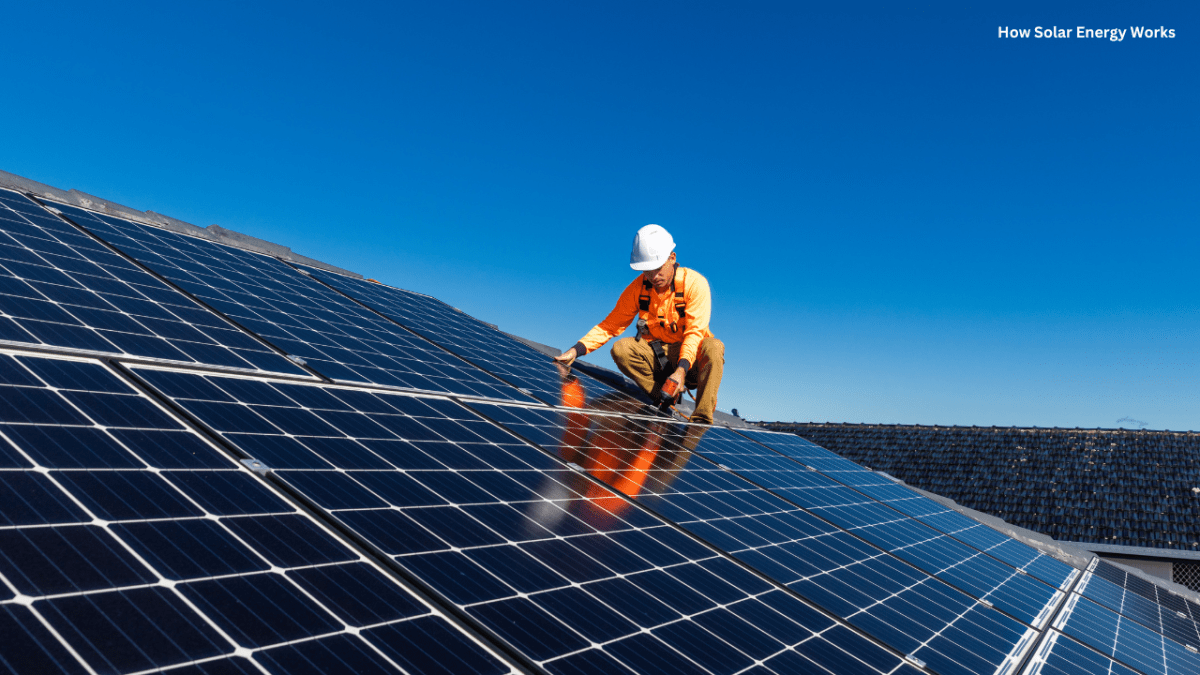

As the world increasingly turns to renewable energy sources, solar power has emerged as a leading solution for sustainable energy. But how exactly does solar energy work? This article breaks down the science and technology behind solar power, from the basics of sunlight to the electricity that powers our homes and businesses.
The Basics of Solar Energy
Solar energy is derived from the sun’s radiation, which is a powerful and inexhaustible energy source. The Earth receives an enormous amount of solar energy every day, more than enough to meet the global energy demand many times over. Solar technologies capture this energy and convert it into usable forms, primarily electricity.
Photovoltaic (PV) Cells: The Heart of Solar Power
The most common technology for converting sunlight into electricity is through photovoltaic (PV) cells. PV cells are the building blocks of solar panels. Here’s how they work:
- Absorption of Sunlight:
- PV cells are made of semiconductor materials, usually silicon. When sunlight hits a PV cell, the energy from the light is absorbed by the semiconductor material.
- This energy excites electrons in the material, knocking them loose from their atoms.
- Generation of Electric Current:
- PV cells are designed with an electric field that forces these free electrons to move in a particular direction. This flow of electrons creates an electric current.
- Metal contacts on the top and bottom of the PV cell collect these electrons and transfer them to wires, generating direct current (DC) electricity.
- Conversion to Usable Electricity:
- Most homes and businesses use alternating current (AC) electricity. Therefore, the DC electricity generated by the PV cells is passed through an inverter, which converts it into AC electricity.
- This AC electricity can then be used to power appliances, lights, and other electrical systems.
Solar Panels and Arrays
A single PV cell produces a relatively small amount of electricity. To generate enough power for practical use, multiple PV cells are connected to form a solar panel. Several panels can be linked together to form a solar array, providing even more electricity.
Types of Solar Panels
There are different types of solar panels, each with its unique characteristics:
- Monocrystalline Solar Panels:
- Made from a single, pure crystal of silicon.
- Known for their high efficiency and longevity.
- Typically more expensive than other types.
- Polycrystalline Solar Panels:
- Made from multiple silicon crystals melted together.
- Slightly lower efficiency compared to monocrystalline panels.
- Generally more affordable.
- Thin-Film Solar Panels:
- Made by depositing thin layers of photovoltaic material on a substrate.
- Flexible and lightweight.
- Lower efficiency and shorter lifespan compared to crystalline panels but often cheaper and more versatile.
Solar Power Systems
To effectively harness and use solar energy, several components are integrated into a solar power system:
- Solar Panels: Capture sunlight and generate DC electricity.
- Inverters: Convert DC electricity to AC electricity.
- Mounting Systems: Secure solar panels to rooftops or ground-based structures.
- Electrical Panel: Distributes the AC electricity to the building’s electrical system.
- Batteries (Optional): Store excess electricity for use during cloudy days or nighttime.
- Monitoring Systems: Track the performance and efficiency of the solar power system.
Net Metering and Grid Integration
Many solar power systems are connected to the local electrical grid. This allows for a system known as net metering:
- Net Metering: When your solar panels produce more electricity than your home or business uses, the excess electricity is sent back to the grid. In return, you receive credits on your electricity bill. When your system doesn’t produce enough electricity (e.g., at night), you can draw power from the grid using these credits.
Benefits of Solar Energy
Solar energy offers numerous benefits:
- Renewable and Sustainable: Solar power is an abundant and inexhaustible resource.
- Environmentally Friendly: Reduces greenhouse gas emissions and reliance on fossil fuels.
- Cost Savings: Lowers electricity bills and can provide long-term financial benefits.
- Energy Independence: Reduces dependence on external energy sources and stabilizes energy costs.
Conclusion
Solar energy harnesses the power of the sun to generate clean, renewable electricity. By understanding the technology behind photovoltaic cells, the types of solar panels, and how solar power systems work, we can appreciate the transformative potential of solar energy. As advancements in solar technology continue, solar power will play an increasingly vital role in meeting our energy needs sustainably and efficiently.